
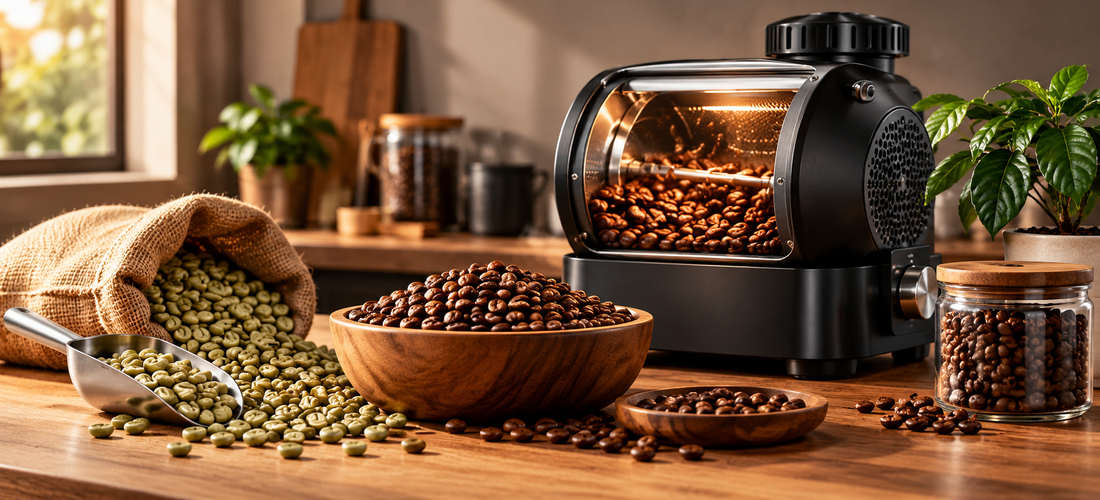
Home roasting lets you control roast levels and try different beans. Choose a machine based on your budget, batch size, space, and ventilation.
Key Features to Look for in a Home Coffee Roaster
A good home coffee roaster should fit your budget, batch size, and available space. Look for adjustable roast controls, effective smoke and chaff management, and easy-to-clean components for regular use.
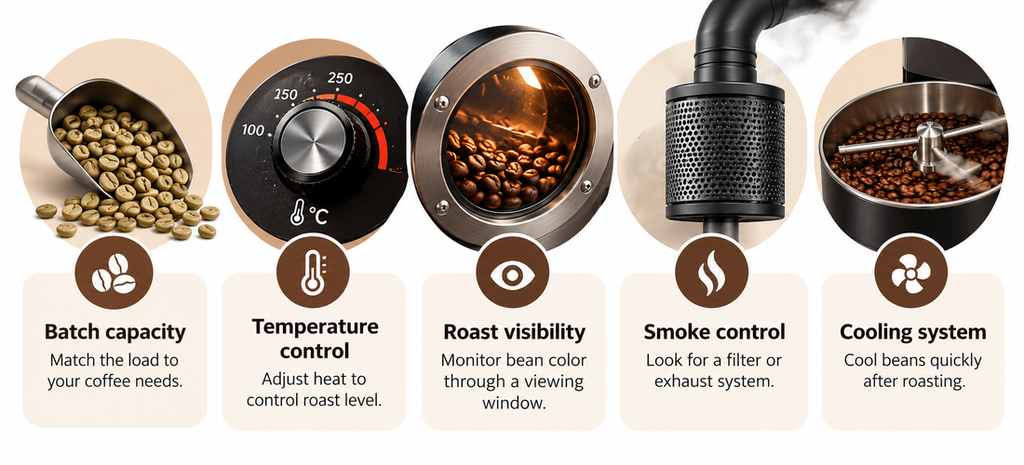
- Batch capacity: Match the load to your coffee needs.
- Temperature control: Adjust heat to control roast level.
- Roast visibility: Monitor bean color through a viewing window.
- Smoke control: Look for a filter or exhaust system.
- Cooling system: Cool beans quickly after roasting.
These features affect convenience, roast consistency, and maintenance. Prioritize the ones that fit your routine rather than paying for settings you may rarely use.
Best 6 Coffee Roaster Machines for Home
The right home coffee roaster depends on your batch size and desired control. Small air roasters suit beginners, while drum models offer more control over roast profiles.
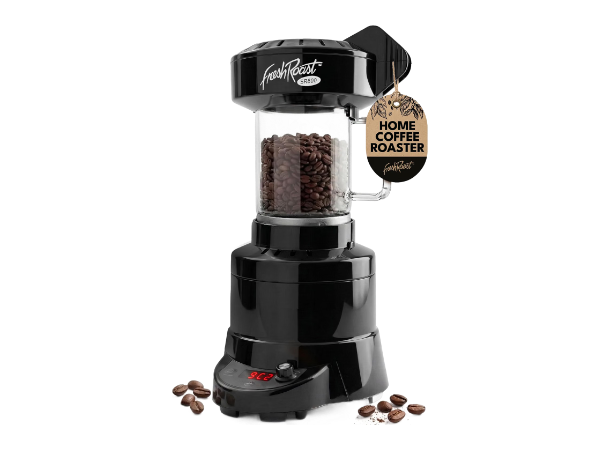
Fresh Roast SR800 Coffee Roaster Bundle
The Fresh Roast SR800 is a home air roaster with adjustable heat and airflow for controlling the roasting process. Bundle versions may include a glass extension tube, digital scale, green coffee beans, sample trays, and a chaff brush.
Key features:
- Batch capacity: Up to 8 oz (226 g) for wet-processed beans
- Dry-processed beans: Up to 6 oz (170 g)
- Roast time: Approximately 4–10 minutes
- Heat control: 9 adjustment levels
- Airflow: Adjustable fan speed
- Display: Real-time temperature readout
The SR800 suits home users who want control over small batches. Check the seller’s bundle details before buying, as included accessories can vary.
1Pound Electric Coffee Roaster with Smoke Filter
The 1Pound PKF-500 is a countertop electric roaster designed for home coffee roasting. It combines automatic and manual operating modes with a smoke filter, exhaust tubes, and a chaff collector.
Key features:
- Batch capacity: Up to 1 lb (454 g)
- Operating modes: Automatic, assisted, and manual
- Smoke control: Built-in filter
- Ventilation: Two chimney tubes
- Chaff collection: Included collector
- Dimensions: Approximately 19 × 10 × 15 inches
It is advertised for light roasting, and the chimney tubes must be routed appropriately rather than allowing smoke to accumulate indoors.
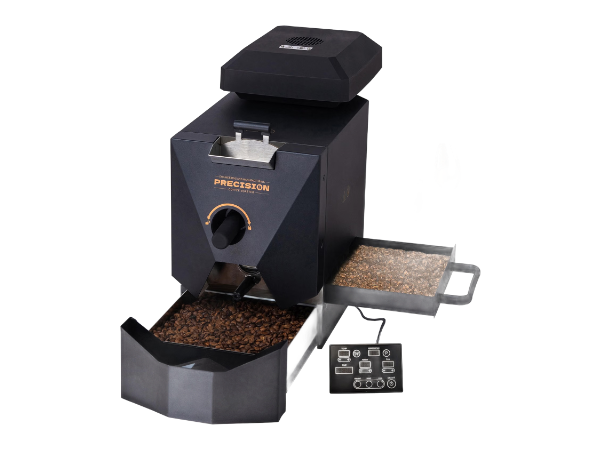
Fresh Roast SR540 Automatic Coffee Bean Roaster
The Fresh Roast SR540 is a compact air roaster designed for smaller batches and hands-on control. Its adjustable heater and fan, together with a real-time temperature display, help users monitor roasting progress.
Key features:
- Batch capacity: Approximately 120 g
- Roast time: About 5–10 minutes
- Heat control: 9 adjustment levels
- Airflow: Adjustable fan speed
- Timer: Adjustable roasting time
- Power: 120V
Its independent heat and airflow controls provide more flexibility than basic electric roasters with a single automatic program.
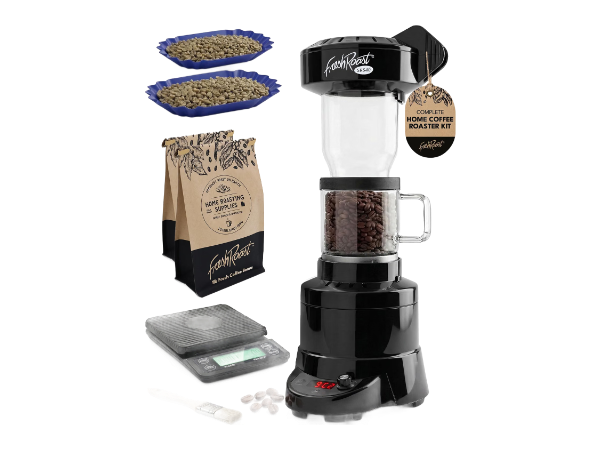
WINB Electric Coffee Roaster Machine
The WINB electric coffee roaster is a budget-oriented model with a temperature dial and timer. Its advertised large capacity makes it worth considering for households that want to roast more beans per batch.
Key features:
- Advertised capacity: Up to 750 g
- Power supply: 110V
- Temperature: Adjustable dial
- Timer: Built-in
- Operation: Automatic roasting
- Chaff collection: Built-in collector
The WINB offers a large advertised capacity at a relatively accessible price. However, it does not list a dedicated smoke filter, so adequate ventilation is essential when using it at home.
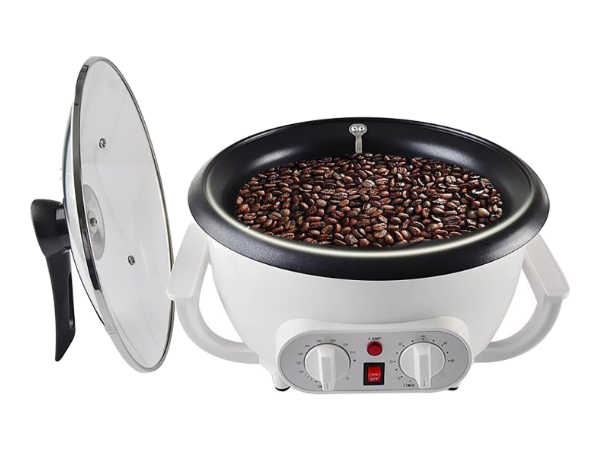
MooKuQi Electric Coffee Bean Roaster
The MooKuQi electric roaster combines adjustable temperature settings with a timer, automatic cooling, and built-in smoke control.
Key features:
- Batch capacity: 500 g (approximately 1.1 lb)
- Power supply: 110V
- Temperature: Adjustable
- Timer: Built-in
- Cooling: Automatic cooling function
- Smoke handling: Built-in smoke-control feature
A dedicated chaff collector is not clearly listed among the included accessories, so verify the package contents before ordering.
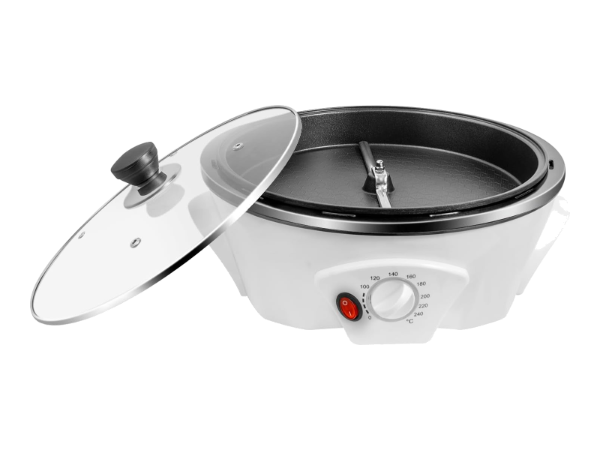
JIAWANSHUN Electric Coffee Bean Roaster, 1200W
The JIAWANSHUN electric roaster uses a non-stick roasting pan, a stirring mechanism, and a transparent lid to let users monitor the beans.
Key features:
- Power: 1200W
- Power supply: 110V
- Temperature range: 0–240°C
- Timer: Built-in
- Roasting surface: Non-stick pan
- Monitoring: Transparent, vented lid and stirring mechanism
This model is worth considering for budget-conscious home users who want adjustable temperature and a larger roasting chamber.
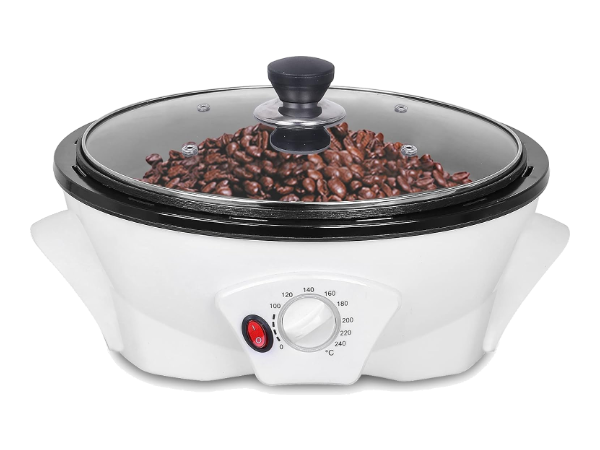
Air Roasters vs. Drum Roasters: What’s the Difference?
Air and drum roasters use different methods to transfer heat to coffee beans. Air roasters circulate hot air through the beans, while drum roasters tumble beans inside a heated rotating chamber.
| Feature | Air Roaster | Drum Roaster |
|---|---|---|
| Heating method | Hot circulating air | Heated rotating drum |
| Typical batch size | Smaller | Often larger |
| Roast time | Generally shorter | Generally longer |
| Learning curve | Often easier for beginners | May require more practice |
| Profile control | Varies by model | Often offers greater control |
Compare the recommended batch size, smoke control, and cleaning requirements before choosing. A larger capacity does not always guarantee more even roasting.
How to Vent and Control Smoke When Roasting Coffee Indoors
Coffee roasting produces smoke, odors, and loose chaff, particularly as beans reach darker roast levels. Before buying a machine, consider where its exhaust will go and whether your space can handle the fumes.
Follow these practical steps:
- Vent outdoors: Use a suitable exhaust system.
- Control smoke: Choose a model with a smoke filter.
- Remove chaff: Empty the collector regularly.
- Choose a safe spot: Keep the roaster away from flammable materials.
- Follow instructions: Avoid improvised exhaust setups.
If your kitchen lacks effective ventilation, consider roasting outdoors in a suitable, protected area. Never assume that a machine marketed for home use is automatically suitable for an enclosed kitchen.
What Size Home Coffee Roaster Do You Need?
Choose a roaster based on how much roasted coffee you use, how often you want to roast, and how much space you have for the machine and ventilation.
- Occasional use: A small roaster is suitable for modest batches and experimenting with different beans.
- Daily home brewing: A medium-capacity model can reduce the need for frequent sessions.
- Heavy coffee consumption: A larger drum roaster may be more practical if your space and ventilation can accommodate it.
Also measure the available counter space and leave room for airflow, cleaning, and safe exhaust. A larger machine is not always better if you rarely need its full capacity.
How Much Coffee Can a Home Roaster Handle per Batch?
Home roaster capacities vary by design. For example, the Fresh Roast SR540 is rated for about 120 g of green beans, while the SR800 accommodates up to 226 g for suitable beans and conditions.
When comparing batch sizes, remember:
- Maximum capacity: The manufacturer’s stated upper limit.
- Recommended capacity: The amount the machine handles effectively under normal conditions.
- Roasted yield: Beans lose moisture and mass during roasting.
- Weekly demand: Larger batches may reduce how often you need to roast.
As a rough planning estimate, green coffee may lose around 15–20% of its weight during roasting, depending on roast level and bean characteristics. A 200 g green batch may therefore yield approximately 160–170 g of roasted coffee.