
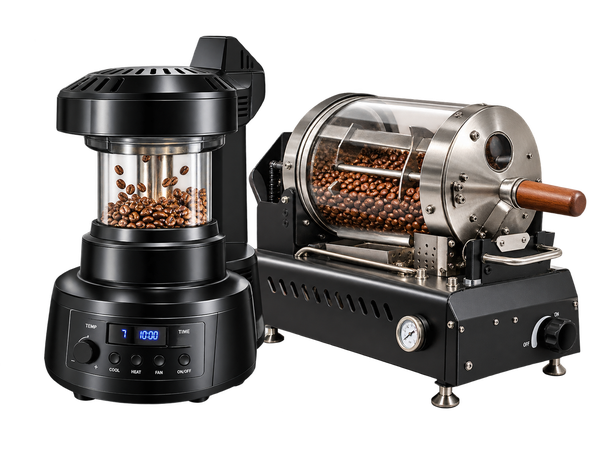
The right coffee roaster depends on your expected production, available space, power source, roast control, and budget. Below, we look at six models and explain what to consider before buying one.
What Roaster Capacity Does a Small Business Need?
A machine that handles 200–300 grams per batch may work well for very small production, while a 500-gram or larger roaster is more practical when you need to roast several pounds of coffee regularly.
| Roaster Capacity | Best For |
|---|---|
| 170–250 g | Samples, testing, very small batches |
| 300–400 g | Micro-roasting and small coffee businesses |
| 500 g | Regular small-batch production |
| 1 lb / 450 g+ | Higher-volume small businesses |
| 1 kg+ | Growing roasting operations |
Keep in mind that the stated capacity is usually the maximum batch size, not necessarily the ideal amount for every roast.
Best Coffee Roaster Machines for Small Businesses
Here are six options worth considering for small-batch roasting. They vary in capacity, operation, and fuel type, so the best choice depends on how much coffee you plan to produce.
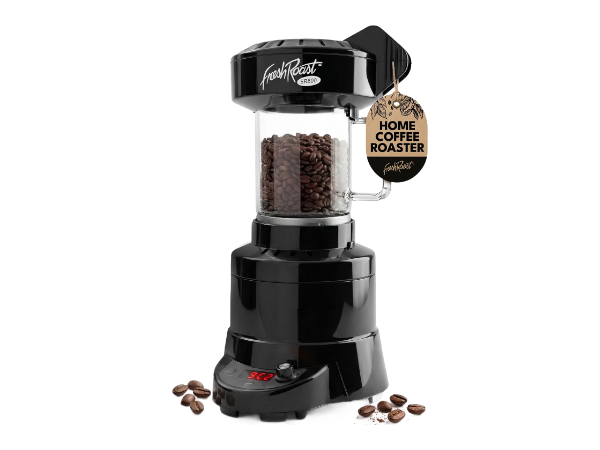
Fresh Roast SR800 Coffee Roaster
The Fresh Roast SR800 is a compact electric air roaster designed for small batches and hands-on roast control. Its larger chamber and adjustable fan and heat settings give users more flexibility than many entry-level home roasters.
Key Features:
- Batch capacity: Up to 8 oz (226 g) for wet-processed beans
- Dry-process capacity: About 6 oz (170 g)
- Heat control: 9 adjustable heat levels
- Fan control: 9 airflow settings
- Display: Real-time temperature readout
- Power: 120V electric operation
For a small business, however, its relatively small batch size means it is better suited to limited production, sample roasting, or a micro-roasting setup than high-volume production.
Fresh Roast SR540 Coffee Roaster Bundle
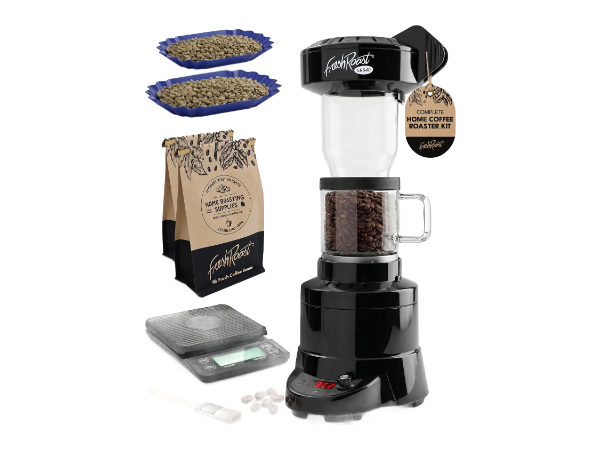
The SR540 bundle combines a compact Fresh Roast roaster with accessories designed to make small-batch roasting easier. The package can include a glass extension tube, digital scale, green coffee beans, sample trays, and a chaff brush.
Key Features:
- Batch capacity: Up to 4 oz (120 g)
- Roast control: Manual operation
- Heat settings: 9 adjustable levels
- Airflow: Adjustable fan range
- Extension tube: Helps improve airflow and bean circulation
- Bundle accessories: Digital scale, green beans, sample trays, and chaff brush
The smaller capacity makes the SR540 better for testing beans, developing roast profiles, and producing limited quantities rather than fulfilling large recurring orders.
Roma Pro Smart Home Coffee Bean Roaster
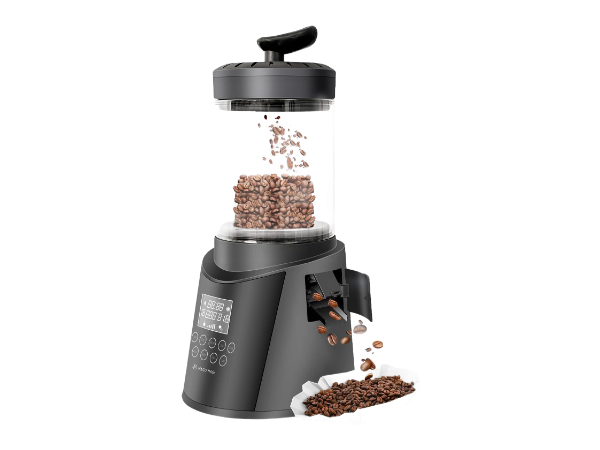
The Roma Pro is a 300 g hot-air coffee roaster with a compact design and digital monitoring. It combines automatic and manual roasting modes, allowing users to either follow a preset approach or make adjustments during the roast.
Key Features:
- Capacity: Up to 300 g per batch
- Power: 1,800W total
- Voltage: 110–120V US version
- Roasting modes: Automatic and manual
- Chamber: Heat-resistant glass for roast visibility
- Design: Compact body for limited workspace
For a small coffee business, the compact design can be useful when workspace is limited and production volumes remain relatively modest.
1-Pound Electric Coffee Roaster
This 1-pound electric roaster is designed for users who need a larger batch size without moving to a full commercial roasting system. It can roast approximately 1 lb (454 g) of green coffee and offers automatic, assisted, and manual operation.
Key Features:
- Capacity: Approximately 1 lb (450–454 g)
- Operation: Automatic, assisted, and manual modes
- Smoke management: Smoke filter for lighter roasting
- Ventilation: Two chimney tubes
- Monitoring: Observation window and sample spoon
- Collection: Separate chaff collector
The larger capacity can reduce the number of batches needed when compared with smaller 100–300 g roasters.
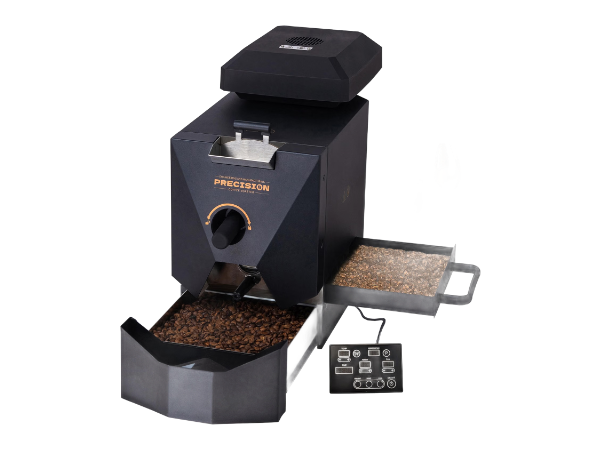
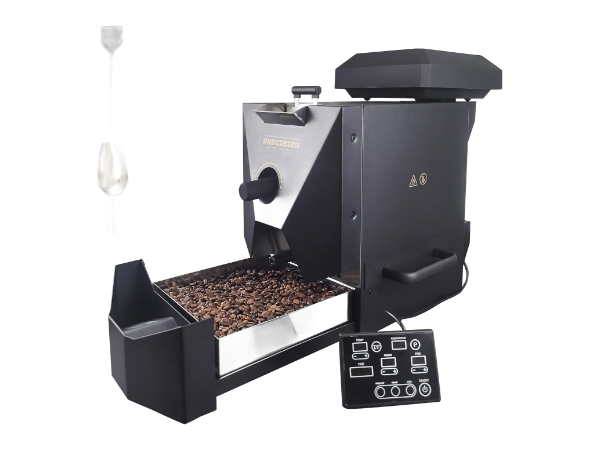
500g Automatic Coffee Roaster Machine
The 500g automatic coffee roaster is aimed at users who want more batch capacity and a combination of automated and manual controls.
Key Features:
- Maximum capacity: 500 g
- Recommended batch: About 350–400 g
- Roasting profiles: 9 automatic profiles
- Operation: Automatic and manual modes
- Smoke control: Smoke purifier and exhaust pipes
- Cooling: Separate cooling system for roasted beans
The 500 g format offers noticeably more capacity than compact Fresh Roast machines, making it more suitable for regular small-batch production.
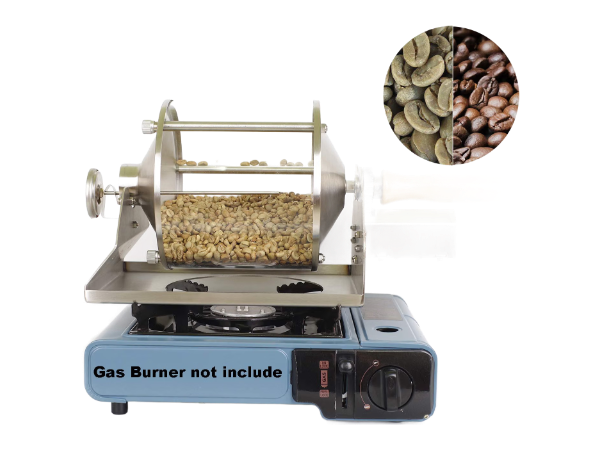
Coffee Roaster Gas Burner 400g
This gas-heated coffee roaster uses a transparent quartz glass drum and a stainless-steel frame, allowing the roasting process to remain visible from start to finish.
Key Features:
- Maximum capacity: Up to 400 g
- Recommended batch: Approximately 200–300 g
- Heating: External gas burner
- Drum: Transparent quartz glass
- Motor: 12V low-voltage motor
- Frame: Stainless steel construction
The transparent drum makes this model particularly interesting for hands-on roasting because the bean color and movement are easy to observe.
Gas vs. Electric Coffee Roasters: Which Is Better for Small Businesses?
Both gas and electric machines can work for a small roasting operation. The better option depends on your workspace, electrical setup, ventilation, and preferred roasting style.
| Feature | Electric Roaster | Gas Roaster |
|---|---|---|
| Setup | Usually simpler | Requires gas supply |
| Temperature control | Often straightforward | Can offer responsive heat adjustment |
| Installation | Generally easier | May require additional setup |
| Portability | Often better | Usually less portable |
| Small batches | Very suitable | Suitable |
| Operating environment | Depends on smoke/ventilation | Requires appropriate ventilation |
For a home-based or compact operation, an electric machine may be easier to install. A gas machine can make more sense when the workspace is already equipped for gas roasting and proper ventilation.
Coffee Roaster Maintenance: What Business Owners Should Know
Regular maintenance is important because coffee roasting produces chaff, smoke, and oils that can accumulate inside the machine.
Follow the manufacturer’s cleaning instructions, but common maintenance tasks include:
- Remove chaff regularly from the collection area.
- Clean the roasting chamber according to the manufacturer’s instructions.
- Check ventilation paths for buildup or blockages.
- Inspect seals and moving parts periodically.
- Clean cooling components to maintain consistent airflow.
- Keep electrical or gas connections in good condition.
A clean roaster is easier to operate and can help maintain more consistent roasting results.