
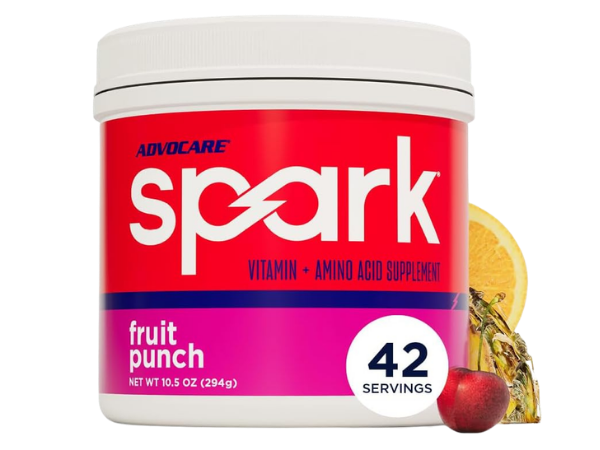
AdvoCare Spark – Energy Drink Mix – Fruit Punch
Caffeine
120 mg
Note: Caffeine amounts are based on one standard serving of AdvoCare Spark Fruit Punch (7 g powder mixed with 8 fl oz water).
| Attribute | Value |
|---|---|
| Caffeine Level | Moderate |
| Serving Size | 1 scoop (7 g powder) |
| Serving Size (ml) | 240 ml |
| Caffeine | 120 mg |
| Calories | 15 kcal |
| Caffeine per fl oz | 15 mg/fl oz |
AdvoCare Spark Fruit Punch is a powdered energy drink mix designed to deliver both flavor and functional benefits.
What Is AdvoCare Spark Fruit Punch?
AdvoCare Spark Fruit Punch is part of AdvoCare’s flagship Spark line, which blends energy‑enhancing ingredients with refreshing flavors. It is sold as a powdered mix that can be stirred into water, offering convenience and portability.
Key Features of AdvoCare Spark Fruit Punch:
- Powdered drink mix for easy preparation
- Fruit punch flavor with balanced sweetness
- Includes caffeine, amino acids, and vitamins
- Designed to support focus and energy
- Marketed as a low‑calorie option compared to sodas
Together, these traits make Spark Fruit Punch appealing to people who want a functional energy drink that doesn’t rely solely on sugar.
Caffeine Content in AdvoCare Spark Fruit Punch
One of the most important aspects of Spark Fruit Punch is its caffeine content. Each serving contains 120 mg of caffeine, which is comparable to a strong cup of coffee. This amount is enough to increase alertness and reduce fatigue without being excessively high for most healthy adults.
Caffeine Comparison:
- Spark Fruit Punch: 120 mg per serving
- Average cup of coffee: 95–120 mg
- Standard energy drink (16 oz): 160–200 mg
- Green tea (8 oz): 30–50 mg
- Espresso shot: 65–75 mg
It’s particularly useful for people who want predictable energy levels without the jitters often associated with stronger energy drinks.
How AdvoCare Spark Boosts Energy Levels
Spark’s energy effects come from more than just caffeine. The formula combines stimulants with nutrients that support brain function and endurance. This synergy helps users feel energized, focused, and motivated throughout the day.
Energy‑Enhancing Components:
- Caffeine: Stimulates the central nervous system
- B‑Vitamins: Support metabolism and energy conversion
- Amino acids: Assist with focus and endurance
- Taurine: Helps regulate energy and reduce fatigue
- L‑Tyrosine: Supports mental clarity under stress
By combining these ingredients, Spark delivers a smoother energy curve compared to drinks that rely solely on sugar. Users often report feeling more focused and less prone to energy crashes.
Flavor Profile: Fruit Punch Taste, Sweetness, and Mixability
Flavor is a major selling point of Spark Fruit Punch. Unlike bitter or overly sweet energy drinks, Spark offers a balanced fruit punch taste that mixes easily with water.
Flavor Highlights:
- Bright fruit punch taste with tropical notes
- Balanced sweetness without heavy sugar
- Powder dissolves quickly in cold water
- Refreshing alternative to canned drinks
- Can be customized by mixing with sparkling water
This flavor profile makes Spark enjoyable to drink daily. Its mixability ensures that users can prepare it quickly, whether at home, in the gym, or at work.
Ingredients Breakdown: What’s Inside AdvoCare Spark
AdvoCare Spark Fruit Punch is more than just caffeine—it’s a carefully designed formula that blends vitamins, amino acids, and nutrients to support both mental and physical performance. This combination makes Spark stand out from traditional energy drinks, offering a functional boost without relying on sugar.
Key Ingredients in AdvoCare Spark:
- Caffeine – Provides stimulation and alertness.
- Vitamin B6 & B12 – Support energy metabolism and reduce fatigue.
- Niacin & Riboflavin – Aid in cellular energy production.
- Taurine – Helps regulate energy and supports endurance.
- L‑Tyrosine – Enhances focus and cognitive performance under stress.
- L‑Carnitine – Supports fat metabolism and sustained energy.
- Sucralose – A zero‑calorie sweetener for taste without sugar.
- Citric Acid – Adds tartness and helps with mixability.
Unlike many canned energy drinks, Spark’s inclusion of vitamins and amino acids makes it appealing to those who want a supplement that contributes to long‑term health goals.
Potential Side Effects of AdvoCare Spark Fruit Punch
While AdvoCare Spark Fruit Punch is generally safe for healthy adults, it does contain stimulants that may cause side effects if consumed in excess or by individuals sensitive to caffeine.
Possible Side Effects of Spark Fruit Punch:
- Jitters and Restlessness – Some users may feel shaky or overly stimulated.
- Sleep Disruption – Consuming Spark late in the day can interfere with rest.
- Increased Heart Rate – Sensitive individuals may notice palpitations or elevated pulse.
- Digestive Upset – Mild stomach discomfort can occur, especially on an empty stomach.
- Headaches – Overuse or combining with other caffeine sources may trigger headaches.
- Dependence Risk – Regular use may lead to reliance on caffeine for energy.
- Dehydration – Caffeine has mild diuretic effects if hydration is not maintained.
These side effects are not guaranteed but can appear depending on personal tolerance, overall health, and lifestyle factors. Moderation is key—most users benefit from limiting Spark to one serving per day and avoiding it close to bedtime.
Best Times to Drink AdvoCare Spark for Energy
Timing is crucial when it comes to maximizing the benefits of AdvoCare Spark Fruit Punch. Because Spark contains caffeine and other stimulants, drinking it at the right time can enhance productivity, workouts, and focus while avoiding unwanted side effects like sleep disruption.
Best Times to Consume Spark:
- Morning: As a coffee alternative
- Pre‑workout: For endurance and focus
- Mid‑afternoon: To fight fatigue
- Study sessions: To improve concentration
- Avoid late evenings: To prevent sleep disruption
By aligning Spark consumption with your daily schedule, you can enjoy steady energy without overstimulation. For most people, mornings and early afternoons are ideal, while evenings should be avoided to protect rest and recovery.